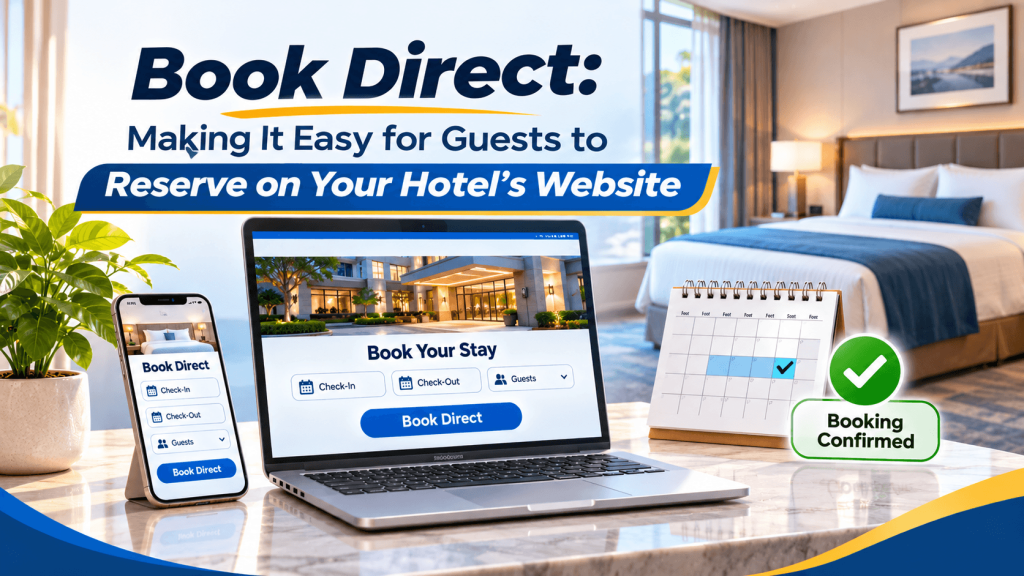
A boutique hotel in Charleston gets most of its reservations through online travel agencies. The owner notices that many guests visit the hotel’s own website first, but the booking button leads to a clunky page that times out on phones. After switching to a mobile-friendly booking engine and adding clear reasons to book direct, more guests complete reservations on the hotel’s site.
Online travel agencies help small hotels reach travelers, but commissions add up. A smooth direct booking experience gives guests a reason to reserve with you.
Remove Friction From Direct Booking
Small details decide whether guests finish booking:
- A visible Book Now button on every page
- A booking engine that works smoothly on phones
- Clear room descriptions, photos, and amenities
- Transparent total pricing, including taxes and fees, before checkout
- Easy-to-find cancellation and change policies
Test the booking process yourself on several devices and fix anything that slows guests down or causes confusion.
Give Guests Reasons to Book Direct
Many hotels offer small benefits for booking direct, such as flexible cancellation, a welcome drink, late checkout on request, or a parking discount. Make sure any offer fits your agreements with booking platforms, since some contracts include rate parity terms.
Be clear about fees. The FTC’s rule on unfair or deceptive fees, which took effect in 2025, requires short-term lodging businesses to show the total price, including mandatory fees, when they advertise prices.
Connect Profiles and Listings to Your Booking Page
Your Google Business Profile includes a website link and, for many hotels, booking options. Make sure the website link goes to a page where guests can easily book, not just a general homepage.
Directories also help travelers find independent properties. A general directory such as Listinger includes a Hotels and Resorts category where travelers compare lodging options, and it shows how others describe amenities and locations. Link your listing to your booking page where possible, and keep contact details consistent.
A common mistake is showing a low nightly rate and adding resort or service fees at the last step, which frustrates guests and can violate fee disclosure rules.
Make Your Website the Easiest Way to Stay
Direct bookings reduce commissions and strengthen guest relationships. Remove friction, show total prices clearly, offer genuine reasons to book direct, and point your profile and listings, including on Listinger, to your booking page.
Frequently Asked Questions
Should small hotels stop using online travel agencies?
Usually not. Online travel agencies help new guests discover your property, especially travelers unfamiliar with the area. Many hotels use them for visibility while encouraging repeat guests to book direct. The goal is a healthy balance between channels, not eliminating one.
What is rate parity?
Rate parity refers to contract terms with some booking platforms that limit offering lower public rates on your own website. Terms vary by platform and region, and some places restrict these clauses. Review your agreements before advertising lower direct rates, and consider adding value instead of discounting.
How should hotels display taxes and fees?
Show the total price, including mandatory fees, as early as possible. In the U.S., the FTC’s fee rule requires short-term lodging businesses to include mandatory fees in advertised prices. Itemize taxes and fees clearly at checkout so guests understand exactly what they’re paying.
Can we offer perks to guests who book direct?
Yes. Many hotels offer perks such as flexible cancellation, breakfast, or late checkout on request. Make sure perks are honored consistently and fit your platform agreements, and explain them clearly on your website so guests see the value of booking direct.